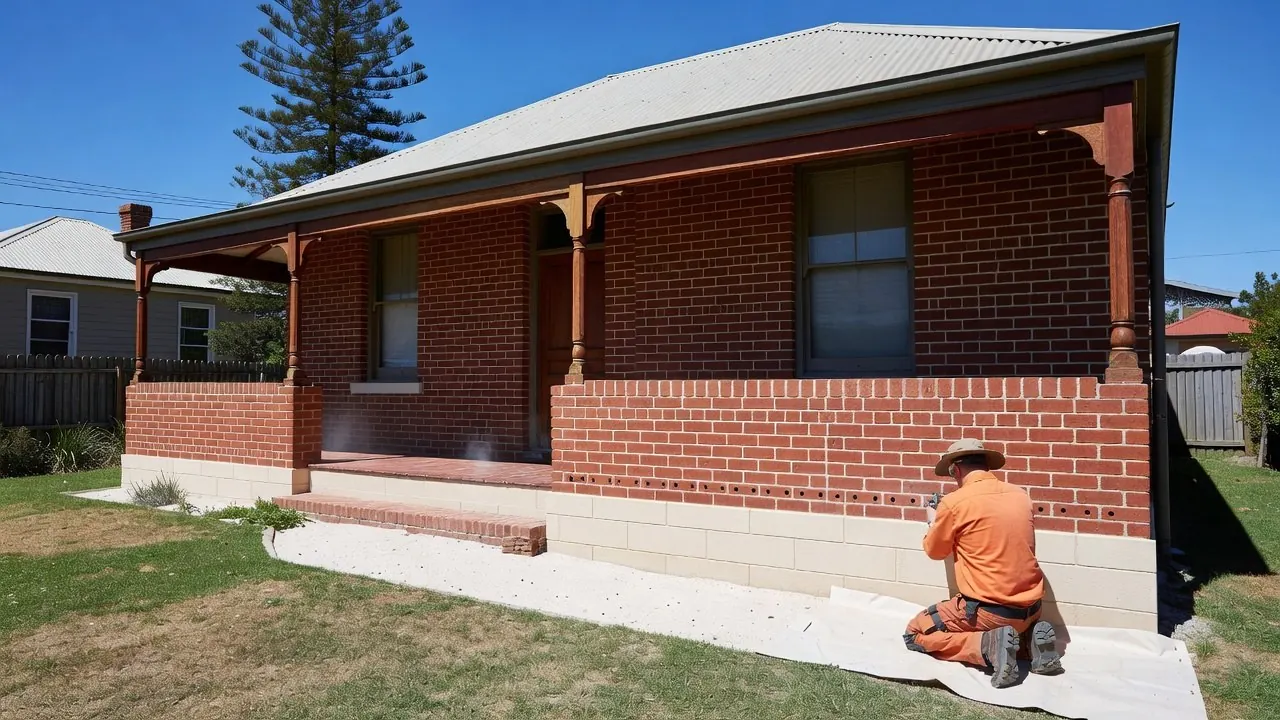
Rising Damp Perth treats damp in Perth's older limestone and double-brick homes. We diagnose what is actually happening to the wall before we quote to fix it.
Call 0468 050 296Talk it through. Tell us what you're seeing — or what your building report said — and we'll book an on-site assessment ($450 plus GST) with a written diagnosis. A fixed quote follows the assessment.
We call you back to talk it through. Any work is quoted after we have assessed the wall.
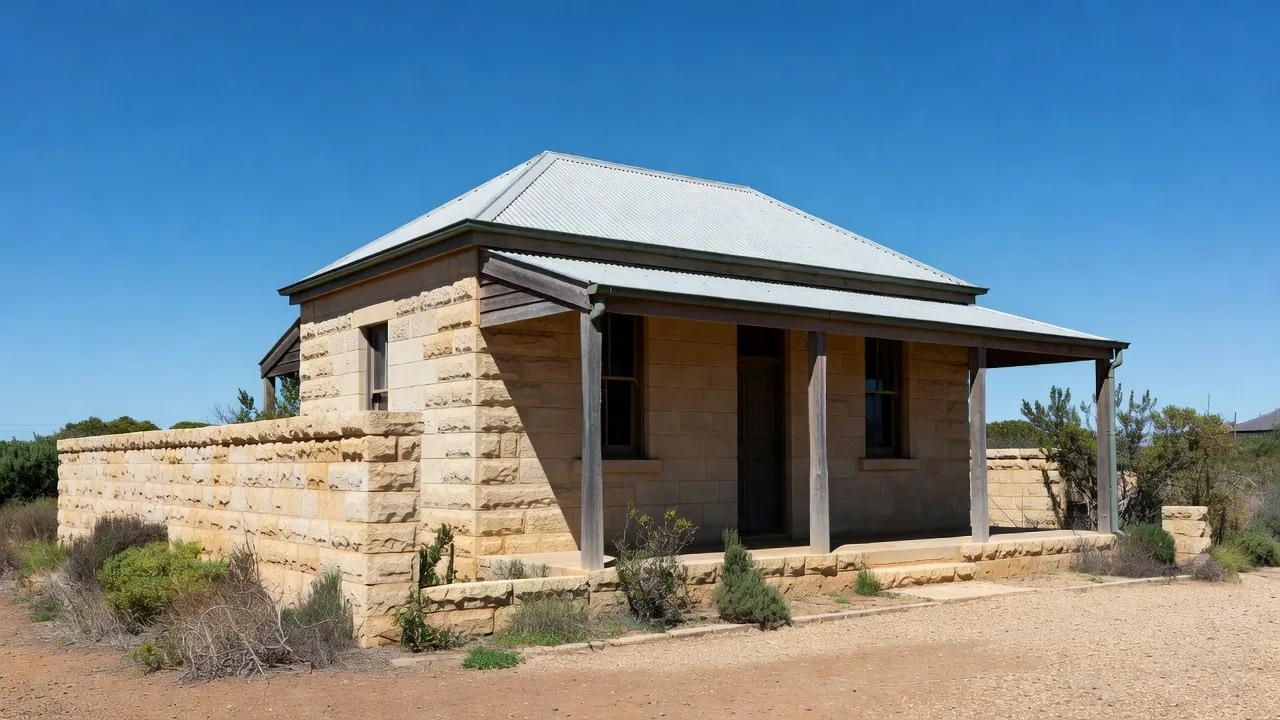
Why Perth homes get rising damp: Perth's older suburbs are largely built from what was quarried out of the ground beneath them. Limestone cut from local quarries went into Fremantle, Cottesloe and Claremont; double brick took over from about the 1900s. Both are porous, both sit on sand, and an older wall may have been laid with no damp-proof course.
Perth gets about 727mm of rain a year on about 78 days of 1mm or more, and three quarters of it falls between May and September. That concentration is the whole problem. A wall spends the wet months taking up groundwater faster than it can release it, then the rest of the year drying out — so the damage builds every winter and appears to heal every summer. Where an affected wall has been painted over, the paint can look blistered or bubbled rather than stained, because the moisture pushes the new coat back off.
Rising damp only affects ground-floor walls, because the moisture comes up out of the soil. If you can see these low on the wall, it is worth a proper look before it damages the plaster and the skirting.
Not sure it is rising damp? Here is how to tell rising damp from condensation or a leak.
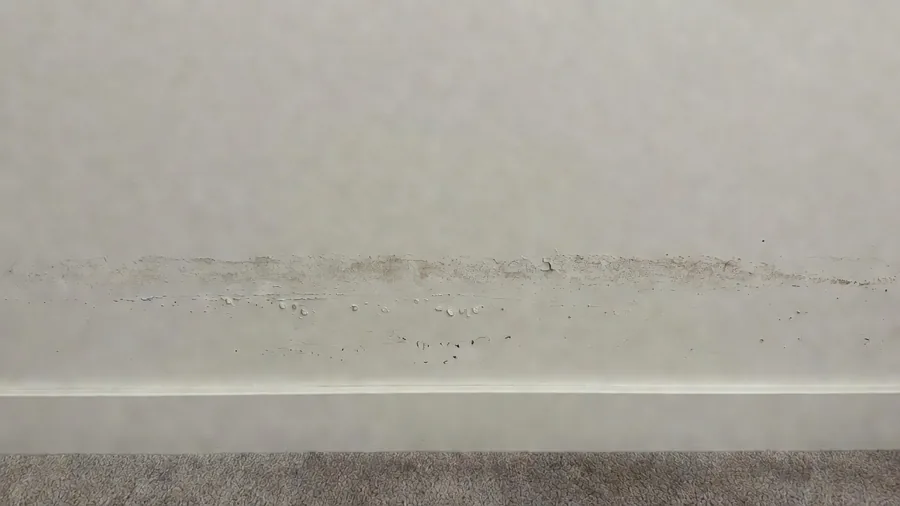
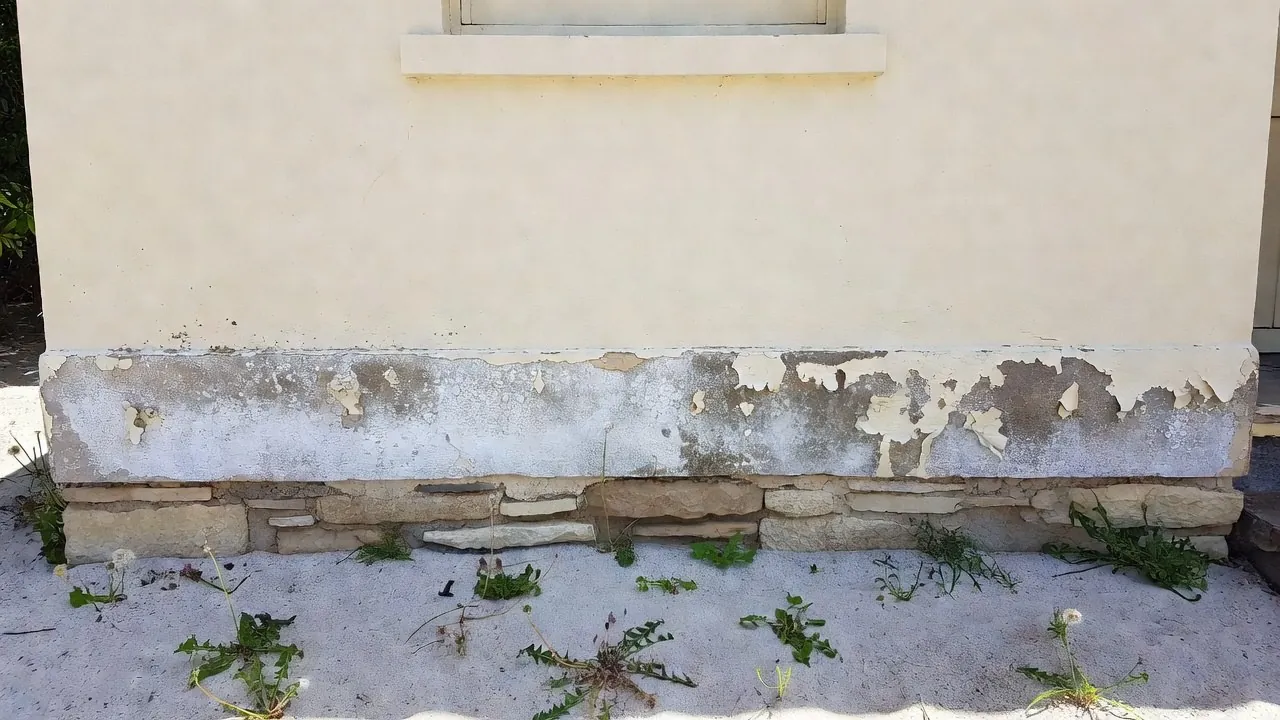
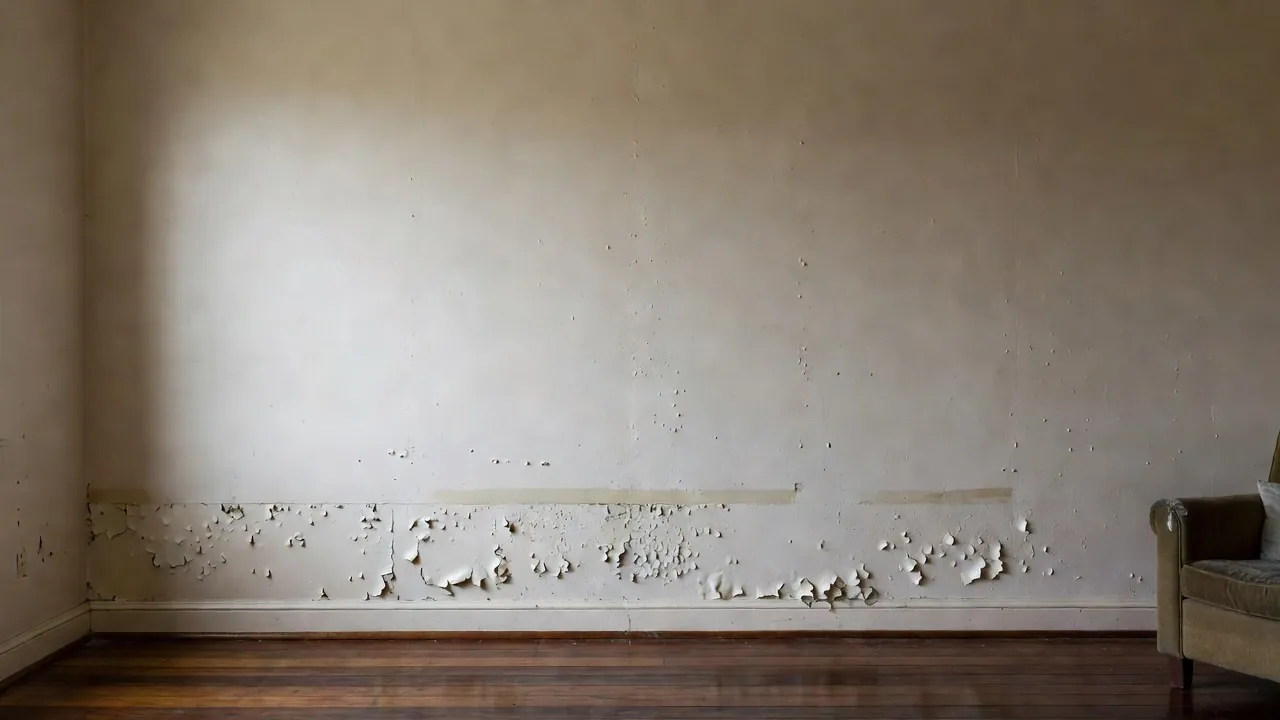
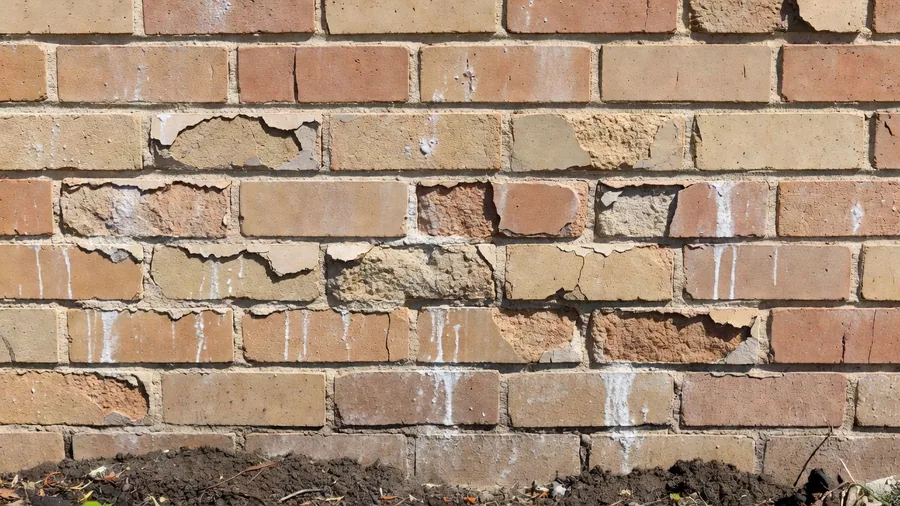
An even horizontal line, roughly 600mm to 1.2m above the floor, on a ground-floor wall. It marks where the water stops climbing and starts evaporating. Condensation does not produce a level line like this.
Salts left behind as the water evaporates. On limestone it often looks like a fine bloom; on brick it can be gritty. Brushing it off works until the next winter.
Usually a sign of a non-breathable coating applied over a wall that needs to dry outward. The coating is not failing — it is doing its job and trapping the moisture behind it.
Salt crystallisation forcing the surface apart. It is usually well advanced before anyone calls it damp.
Bore water. Perth's reticulation draws iron-rich groundwater, and where it hits a wall the iron stains it. It is not rising damp, it is cosmetic, and it is worth knowing before you pay to treat the wrong thing.
A smell that comes back each winter points to a seasonal source, such as ground water or condensation, rather than a leak that runs all year.
What has changed most recently is not the ground — it is what has been built on it. Across the older suburbs, back gardens have been subdivided, second dwellings put up behind existing homes, and driveways run down the side of houses that never had one. Each of those can raise or re-level the ground against a wall, and paving laid above the old damp course bridges it completely. So when damp appears on a wall that coped for decades, the first question is what has been built against it.
Sand drains beautifully until it does not. In a Perth winter the ground under the lower river and coastal streets can stay wet for months, and a wall standing in damp sand behaves like a wick. How close the water table sits under one address is a question for the WA Government's Perth Groundwater Map, not for a suburb name. The moisture climbs until the rate it evaporates from the wall face matches the rate it arrives, which is what sets the height of the tide-mark.
Salt is the second half of it. Groundwater carries dissolved salts up into the wall and leaves them behind when the water evaporates. On the coast, more salt arrives on the wind. Those crystals expand as they form, and that is what blows render off limestone and crumbles the face of a brick — the water moves it, but the salt does the damage.
Perth's rain arrives in five months and then almost stops. The table is the Bureau of Meteorology long-term average for Perth Metro.
| Month | Rain | Days of rain (1 mm or more) | 9am humidity | 3pm humidity |
|---|---|---|---|---|
| January | 15.9 mm | 1.6 | 51% | 39% |
| March | 21.6 mm | 2.5 | 57% | 40% |
| May | 84.5 mm | 8.4 | 72% | 50% |
| June | 126.9 mm | 11.3 | 78% | 56% |
| July | 144.3 mm | 14.3 | 80% | 57% |
| August | 124.3 mm | 12.7 | 75% | 54% |
| September | 78.7 mm | 10.4 | 67% | 53% |
| November | 24.0 mm | 3.8 | 52% | 44% |
Source: Bureau of Meteorology, Perth Metro, station 009225. Annual rainfall 726.9 mm on 78.2 days of 1 mm or more. Read on 14 October 2026.
What we read from it. May to September brings 558.7 mm, about 77 per cent of the year. July alone has 14.3 rain days. December to February together bring 38 mm, and the afternoon humidity in January and February sits under 40 per cent. So a wall in sand takes up water for five months, then dries hard for five. Salt is left where the water leaves the wall, so each dry season adds to the band. That is why a mark can look healed in March and come back by August. It is also why one look in summer cannot rule rising damp out. Photograph the wall in August and again in February before anyone quotes.
Rising damp is groundwater climbing a wall. Everything else — the salt, the lifting paint, the smell — follows from that one fact.
Houspect, a WA building inspection firm, reports that the damp it investigates is mostly lateral damp, not rising damp. That matters, because the other causes are usually far cheaper to fix.
Common questions about rising damp in Perth. If your question is not here, ring and ask it.
An inspection exists to establish which of five problems you have, because four of them are cheaper to fix than the one everybody assumes.
A chemical damp course is a barrier injected into the mortar line. It is the right fix when there is no working damp course — and the wrong one when the problem is a buried one.
The honest answer is that there is almost nothing to check, which is precisely why the other checks matter so much here.
Limestone built Fremantle, Cottesloe and Claremont. It handles moisture well until somebody seals it.
If the mark on your wall is orange and strongest where a sprinkler hits it, you probably have a reticulation problem, not a damp problem.
Perth has two water problems, not one. A river that floods a narrow corridor, and a water table that rises every winter under much of the coastal plain.
Damp in a Perth wall can be a working damp course that has been buried, not a failed one.
Damp that comes in sideways behaves differently, appears at a different height, and is not fixed by a damp course.
Water moves the salt. The salt does the damage. Treating one without the other is why walls come back.
Here are the published ranges, and what moves a job within them.
The order matters. Injecting a damp course into a wall whose real problem is a paved garden bed is money spent on the wrong thing, which is why the assessment comes first and the quote comes after.
Moisture meter readings at height intervals up the wall, an external check of ground levels, paving and reticulation, and a look at what coatings are already on the wall.
Rising damp, lateral damp through a retaining or buried wall, a plumbing or reticulation leak, condensation, or bore-water staining. They look alike and cost very differently.
If paving has buried the damp course or a garden bed sits against the wall, that is corrected before any chemical course is considered. Injecting around a bridge does nothing.
A chemical course injected into the mortar line, sized to the wall material.
Contaminated render removed and replaced with a salt-retarding, breathable system. Skipping this is why treated walls come back.
A treated wall dries over months, not days. Anyone promising a finished wall in a fortnight is telling you what you want to hear.
What follows is indicative. Every one of these is a range because the wall decides, not the website.
| Work | Indicative range | What it covers |
|---|---|---|
| On-site assessment and written diagnosis | $450 plus GST | Moisture readings across the affected walls, a look at ground levels and drainage, and a written finding on which of the five common causes you actually have. |
| Chemical damp-proof course, per metre | $180 - $340 | Injected into the mortar course. Limestone generally sits at the upper end because it takes more material to achieve a continuous barrier. |
| Salt-retarding replaster, per square metre | $120 - $260 | Old contaminated render off, breathable system on. Can be the larger part of the job. |
| Drainage and ground-level correction | $900 - $6,000 | Lowering paving, cutting back garden beds, adding a drain. Where the cause is bridging rather than a failed damp course, this is the fix. |
| Subfloor ventilation improvement | $1,200 - $4,500 | Much newer Perth housing sits on a slab or on solid footings rather than over a ventilated subfloor, so this applies mainly to the older timber-floored stock. |
Prices are indicative ranges only. Limestone, double brick and rendered walls each cost differently to treat, and every fixed price follows an on-site assessment.
How these figures were set: the $450 plus GST assessment is the one fixed price, set on 8 September 2026. The treatment ranges were entered when the site was built in August 2026 and have not yet been checked against written quotes for Perth jobs, so treat them as a budget guide only.
They do. The ingredients are porous limestone or brick, no damp-proof course, and ground that holds water through winter. Older houses in suburbs such as Fremantle, Subiaco, Mount Lawley and the river suburbs can have all three.
Not necessarily. A wall in sand takes up water through the wet winter and dries in summer, so summer can hide rising damp without fixing it. Condensation can also be worst in winter, so the assessment checks which one it is.
Usually not. Iron-rich bore water from reticulation stains walls orange from the outside. It is cosmetic. Rising damp comes from inside the wall and carries salt, not iron.
Usually a cement render or a plastic paint applied over limestone. Limestone has to breathe. Seal it and the moisture rises higher and pushes the coating off, which is exactly what you are seeing.
You can buy the kit. The reason it usually fails is that the diagnosis was wrong, or the salt already in the wall was never removed, so the tide-mark returns through the new plaster. The chemical is the cheap part.
Western Australia has no damp proofing licence. Building Services Board registration applies only to building work of $20,000 or more, and drainage work needs a licensed plumber. Where a job needs either, that part is done by someone who holds it. For most damp jobs, what matters is a written diagnosis that names the cause.
The physical work is usually a few days. The wall then dries for months. Any finish applied before it has dried will fail, which is why the sequence matters more than the speed.
We carry out assessments across the Perth metropolitan area, including:
 Rising Damp Perth